Bridging local ecosystems
and global governance.
Global Institutions & Policy is a project area through which Sara Roversi operates at the interface between local territories and international governance systems.
It focuses on translating place-based regenerative practices into contributions that inform global agendas on food systems, education, climate action, and cultural heritage.
This work recognizes that global challenges require grounded solutions, and that policies become effective only when they are rooted in lived realities, communities, and ecosystems.
From territories to
global frameworks.
At the core of Global Institutions & Policy lies the connection between local ecosystems and global decision-making.
Through this project, Sara Roversi brings insights emerging from Living Labs, regenerative cities, and community-led initiatives into dialogue with international institutions, policy platforms, and multilateral processes. Local experiences are treated not as isolated case studies, but as sources of knowledge capable of shaping systemic strategies at scale.

Food diplomacy and
systemic policy innovation.
Food is approached as a strategic entry point for policy innovation.
Global Institutions & Policy advances food diplomacy as a tool to address interconnected issues such as climate resilience, social cohesion, health, and cultural identity. By framing food systems as complex living systems, the project contributes to policy discussions that move beyond sectoral silos and embrace integrated, regenerative approaches.
Education for future
decision-makers.
A key dimension of this work is education.
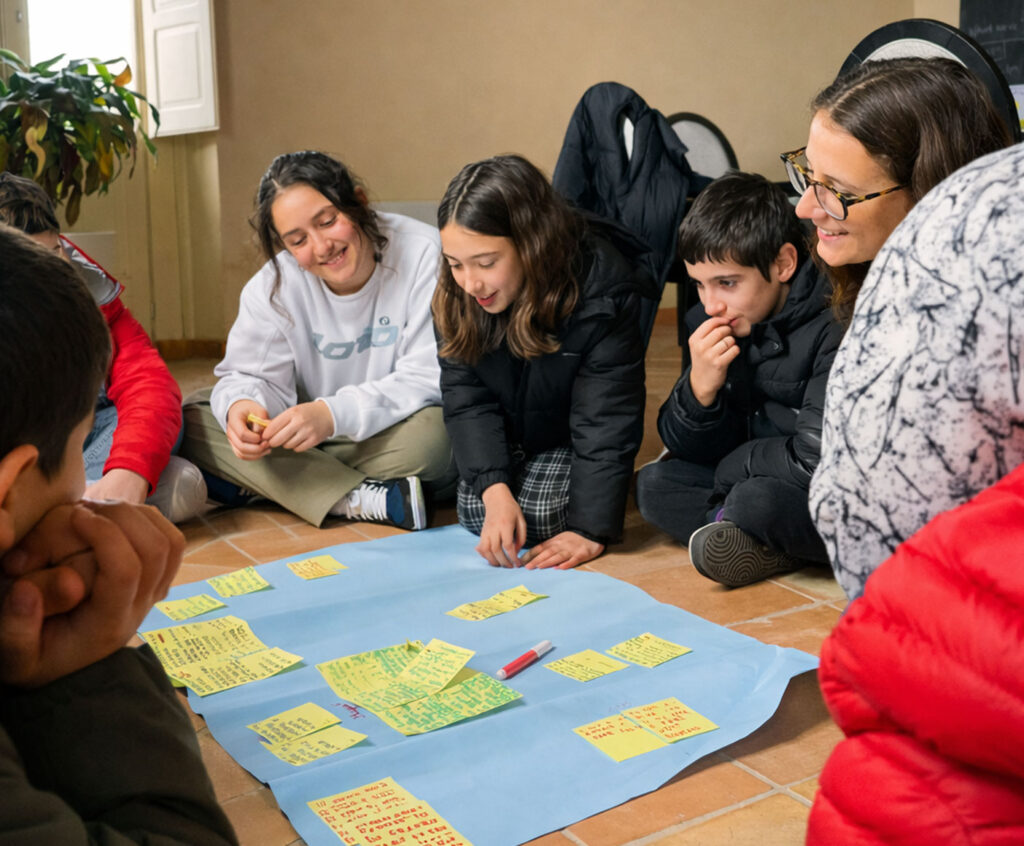
The project supports educational pathways designed for current and future decision-makers, enabling them to understand complexity, navigate uncertainty, and act with long-term responsibility. Learning is positioned as a transformative process that equips leaders with the capacity to align policy, culture, and ecological limits.
Education becomes a lever for systemic change within institutions.
Living heritage as
a policy driver.
Global Institutions & Policy places living heritage at the center of sustainable development strategies.
Cultural, food, and ecological heritage are recognized as dynamic assets that can inform innovation, strengthen resilience, and foster inclusive prosperity. The project advocates for policies that protect and regenerate heritage while enabling communities to actively shape their futures.
Regenerative models
for global scalability.
Rather than exporting predefined solutions, Global Institutions & Policy works to scale principles and processes.
Regenerative models developed in specific contexts are adapted and translated to inform global frameworks, respecting diversity while enabling coherence. Scalability is understood not as replication, but as the capacity to inspire context-sensitive transformation across geographies.