Turning climate commitment
into systemic responsibility.
Climate action requires more than technical solutions. It demands cultural change, coalition building, and shared responsibility.
In Sara Roversi’s work, advocacy and climate action are conceived as systemic, cultural, and political processes, capable of translating ecological awareness into collective responsibility and institutional transformation.
This area brings together her work in advocacy, curation, and systemic mobilization, operating at the intersection of territories, communities, and global governance.
From awareness to
systemic action.
Sara Roversi approaches climate advocacy as a long-term process that connects:
- Science and lived experience
- Local ecosystems and global agendas
- Cultural narratives and policy frameworks
- Community action and institutional responsibility
Climate action is understood not as a sectorial response, but as a transformative force capable of reshaping food systems, cities, education, and governance models.
Climate action as cultural
and political practice.
At the core of this work lies the conviction that the climate crisis is also a cultural and political challenge.
Through public platforms, international initiatives, and Living Labs, Sara Roversi promotes climate action as a space where culture, citizenship, and policy converge. Advocacy becomes a tool to build shared language, align stakeholders, and enable regenerative practices that can scale across territories.
This approach positions climate action as a collective civic responsibility, rooted in place but oriented toward global impact.
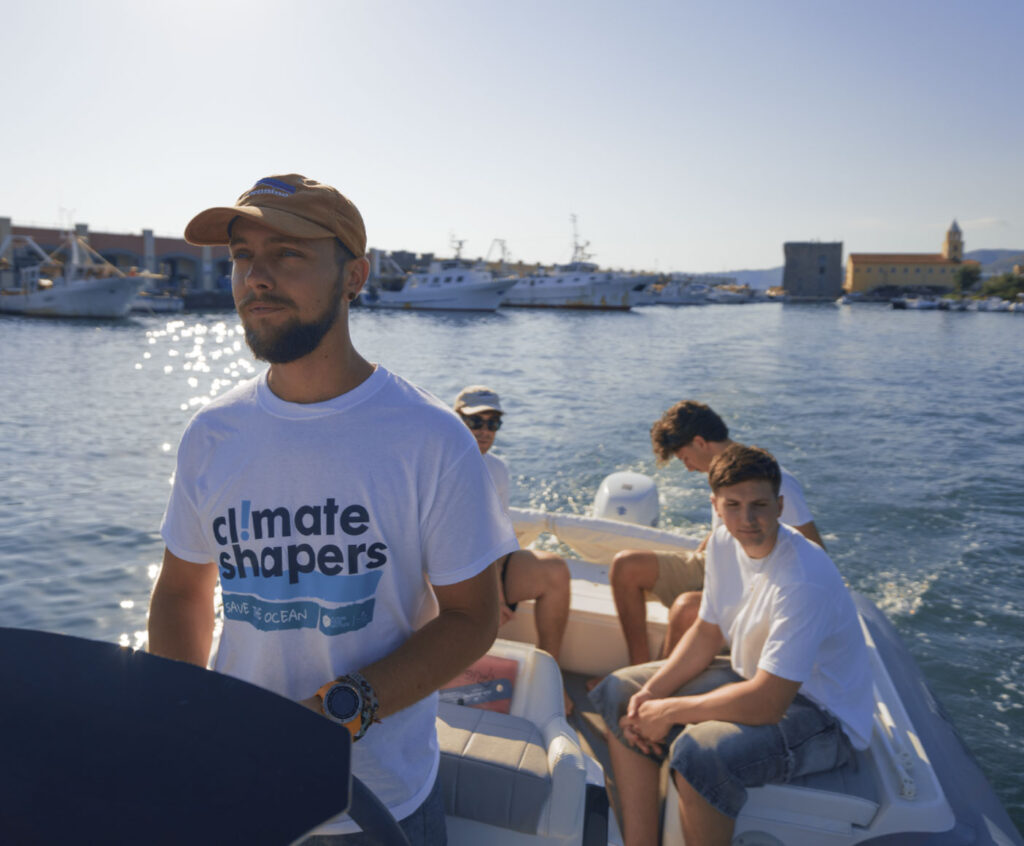
Key initiatives:
Venice Climate Week
Venice Climate Week is conceived as a global platform for climate dialogue, rooted in the symbolic and ecological power of Venice as a water-based city.
Curated through the lenses of water, culture, cities, and territories, the initiative brings together scientists, policymakers, artists, institutions, activists, and citizens to explore climate action beyond technical frameworks. Venice becomes a living laboratory where climate challenges are discussed as cultural, social, and political questions, fostering new alliances between knowledge, governance, and civic participation.
Through conferences, public conversations, artistic interventions, and policy dialogues, Venice Climate Week positions climate action as a shared responsibility, grounded in place and open to global perspectives.
RegenerAction
RegenerAction is a mobilization framework designed to transform regeneration from a conceptual paradigm into collective action.
The initiative connects institutions, territories, organizations, and communities, creating shared spaces where responsibility for the future is actively assumed rather than delegated. RegenerAction promotes regeneration as a systemic process that integrates environmental integrity, social cohesion, cultural heritage, and economic justice.
By activating local ecosystems and aligning them with global challenges, RegenerAction supports collaborative pathways that move from awareness to engagement, and from engagement to long-term transformation.
RegenerAction JP
RegenerAction JP is a cross-cultural regenerative initiative connecting Europe and Japan, developed to explore how regenerative principles can be adapted across different cultural, urban, and ecological contexts.
Focusing on megacities, food systems, and community resilience, the project creates a dialogue between diverse territorial experiences, emphasizing learning through comparison, mutual respect, and shared experimentation. RegenerAction JP addresses the complexity of densely populated urban environments, investigating how regeneration can support social well-being, ecological balance, and cultural continuity.
The initiative strengthens international cooperation, positioning regeneration as a global language capable of bridging geographies, traditions, and future visions.
Advocacy as
systemic mobilization.
Across these initiatives, advocacy is not conceived as lobbying or communication alone, but as systemic mobilization.
Sara Roversi’s work supports climate action that is:
- Place-based and culturally grounded
- Intergenerational and inclusive
- Aligned with institutional and policy frameworks
- Capable of producing long-term regenerative impact
This ensures that climate action is not episodic, but embedded within governance structures, education pathways, and territorial strategies.